
You spend a fortune on non-comedogenic cleansers, targeted serums, and oil-free moisturizers, yet a persistent cluster of bumps remains across your hairline and forehead. For many, the culprit isn’t their skincare routine at all—it’s their haircare.
Is Your Routine Acne-Safe?
Do not guess. Instantly check your products for pore-clogging ingredients with our AI-powered tool.
Check Ingredients NowAs a dermatologist, I frequently see patients struggling with what we call acne venenata, specifically a subtype known as "pomade acne." This condition occurs when the heavy oils, waxes, and silicones in shampoos, conditioners, and styling products migrate from the hair onto the skin, leading to clogged pores and inflammation. If you’re dealing with stubborn forehead congestion, it’s time to audit your shower shelf.
The Science of "Pomade Acne"
The forehead is one of the most sebum-rich areas of the face. When you apply hair products, especially leave-in treatments, they can easily transfer to your skin through perspiration, sleeping on a pillowcase, or simply having your hair touch your face throughout the day.
These ingredients are often "comedogenic," meaning they have a high tendency to block pores. Once a pore is blocked by a heavy oil or wax, sebum (your skin's natural oil) gets trapped beneath the surface. This creates an anaerobic environment where Cutibacterium acnes—the bacteria responsible for acne—thrives, leading to closed comedones (whiteheads) and inflammatory papules.
Key Ingredients to Avoid for Forehead Acne
Not all hair ingredients are created equal. If you are prone to breakouts, look out for these specific offenders on your ingredient labels:
1. Highly Comedogenic Oils (Coconut Oil and Cocoa Butter)
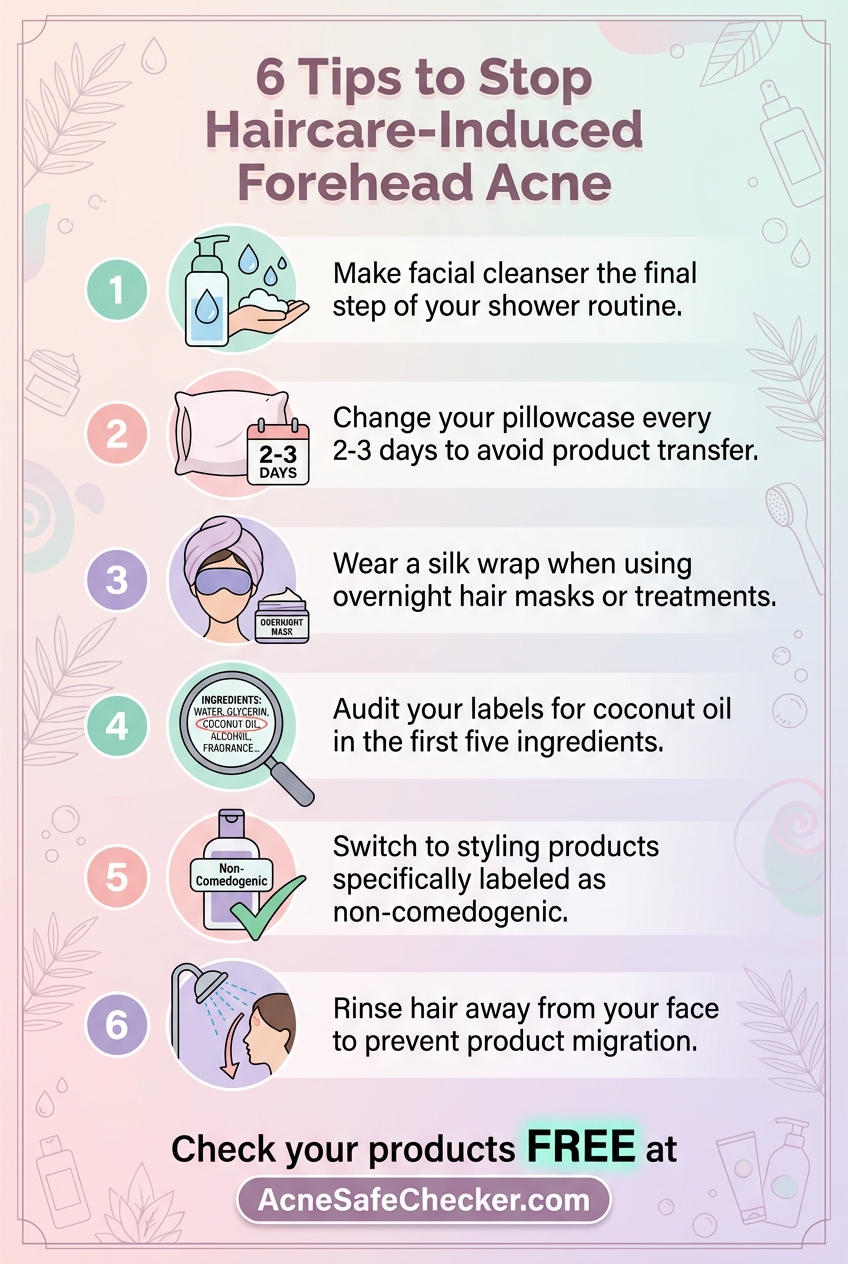
While coconut oil is a miracle worker for dry cuticles and hair shafts, it is a nightmare for acne-prone skin. It contains high levels of lauric acid, which is notorious for being highly comedogenic. If your shampoo or "curl cream" lists Cocos Nucifera (Coconut) Oil in the first five ingredients, it is likely contributing to your forehead breakouts.
2. Isopropyl Myristate and Its Derivatives
This synthetic oil is frequently used in conditioners and styling sprays to provide a smooth, "slip" feeling. However, in the world of dermatology, Isopropyl Myristate is known as one of the most pore-clogging ingredients available. It can penetrate the pores deeply and cause rapid congestion.
3. Heavy Waxes and Petrolatum
Ingredients like beeswax, paraffin, and petrolatum are excellent at sealing moisture into the hair, but they act as occlusives on the skin. They create a physical film that traps heat, sweat, and bacteria against your forehead. These are most common in heavy styling pomades and edge controls.
4. Silicones (Dimethicone and Cyclomethicone)
Silicones aren't inherently comedogenic in the same way oils are, but they are "occlusive agents." They create a breathable but water-resistant barrier. On the skin, this barrier can trap other comedogenic ingredients or natural oils underneath it, effectively "locking in" the substances that cause acne.
5. Sodium Lauryl Sulfate (SLS)
While primarily a surfactant (cleansing agent), SLS is a known skin irritant. In some individuals, the irritation caused by sulfates can lead to follicular inflammation, which mimics acne or makes existing breakouts significantly more red and painful.
How to Tell if Your Haircare is the Problem
If you aren’t sure whether your hair products are the cause, look for these clinical signs:
- The "Hairline Border": Your acne is concentrated almost exclusively within an inch of your hairline.
- Texture Over Tones: You notice many small, skin-colored bumps (closed comedones) that never quite come to a head.
- The Pillowcase Pattern: You notice breakouts on the side of your face that you sleep on, as product transfers from hair to pillow to skin.
Practical Steps to Clear Forehead Acne
Switching your products is the first step, but how you use them matters just as much. Follow these professional tips to minimize risk:
The "Skin-First" Shower Routine
Most people wash their face and then rinse their conditioner. This is a mistake. Conditioner is designed to stick to surfaces; when you rinse it, it runs down your forehead and back. Always make your facial cleanser the final step of your shower routine to ensure all residual hair product is washed away from the skin.
Mind Your Sleep Hygiene
If you use leave-in treatments or overnight hair masks, wear a silk or satin hair wrap to bed. Additionally, change your pillowcase every two to three days. Residual oils from your hair accumulate on the fabric and are pressed into your facial skin for eight hours a night.
Opt for "Non-Comedogenic" Haircare
Fortunately, the beauty industry is catching up. Look for brands that specifically label their shampoos and conditioners as "non-comedogenic" or "safe for acne-prone skin." These formulations typically swap heavy oils for lighter, water-based hydrators like glycerin or panthenol.
Conclusion
Forehead acne can be incredibly frustrating, but it is often one of the most treatable forms of breakouts once you identify the external triggers. By eliminating highly comedogenic oils like coconut oil and Isopropyl Myristate from your haircare routine—and ensuring your face is the last thing you wash in the shower—you can clear your skin without sacrificing the health of your hair.
If your acne persists after making these changes for six to eight weeks, consult a board-certified dermatologist to discuss prescription options or to rule out other conditions like fungal folliculitis.