
Finding the perfect balance between deep hydration and clear pores is often the biggest challenge in skincare. For those with dry yet acne-prone skin, the search usually leads to one iconic blue-and-white tub: CeraVe Moisturizing Cream. But the question remains: is this thick, rich cream actually safe for those of us prone to breakouts?
Is Your Routine Acne-Safe?
Do not guess. Instantly check your products for pore-clogging ingredients with our AI-powered tool.
Check Ingredients NowAs a dermatologist, I frequently see patients who are terrified of heavy moisturizers. They fear that a cream’s texture is a direct indicator of its ability to clog pores. Today, we are going to dive deep into the science behind the formulation to answer once and for all: is CeraVe Moisturizing Cream non-comedogenic?
Understanding the Term "Non-Comedogenic"
Before we look at the specific product, we must define the term. "Comedo" is the medical term for a clogged pore. A "comedogenic" ingredient is one that has a high statistical likelihood of blocking the sebaceous duct, leading to blackheads, whiteheads, or inflammatory acne.
When a product is labeled "non-comedogenic," it means the manufacturer has formulated the product to exclude ingredients known to clog pores under normal usage. While the FDA doesn’t strictly regulate this term with a standardized list of ingredients, most reputable brands like CeraVe perform rigorous testing to ensure their formulas don't cause breakouts.
The Short Answer: Yes, It Is Non-Comedogenic
To put your mind at ease immediately: Yes, CeraVe Moisturizing Cream is non-comedogenic. It is explicitly labeled as such and has been tested to ensure it does not contribute to the formation of acne.
However, for a skincare enthusiast or someone battling adult acne, the label isn't enough. We need to look at the "why" and the "how."
Breaking Down the Key Ingredients
CeraVe’s formula is unique because it combines heavy-duty occlusives with skin-identical ingredients. Let’s look at why this specific combination works without suffocating your skin.
1. The Essential Ceramides (1, 3, and 6-II)
Ceramides are lipids (oils) naturally found in the skin’s barrier. Acne-prone individuals often have a compromised skin barrier, which can actually lead to more breakouts because the skin overproduces oil to compensate for dryness. By replenishing these ceramides, CeraVe helps restore the barrier without adding "heavy" vegetable oils that might be comedogenic.
2. Hyaluronic Acid
This is a humectant, meaning it draws water into the skin. It provides significant hydration without any oiliness, making it a gold-standard ingredient for all skin types, especially those worried about congestion.
3. Petrolatum: The Great Debate
The inclusion of petrolatum (the main ingredient in Vaseline) often scares people. However, pharmaceutical-grade petrolatum is actually non-comedogenic. Its molecules are too large to physically enter the pore. Instead, it sits on top of the skin to prevent Transepidermal Water Loss (TEWL). In the CeraVe formulation, it is balanced so that it provides a protective seal without the "greasy" residue of pure petroleum jelly.
The Role of MVE Technology
One reason CeraVe Moisturizing Cream is so effective for sensitive, acne-prone skin is its MultiVesicular Emulsion (MVE) technology. Instead of a "burst" of hydration that can sit heavy on the skin, MVE technology releases the moisturizing ingredients slowly over 24 hours. This controlled release ensures the skin stays hydrated without a thick layer of unabsorbed product sitting on the surface and potentially trapping sweat or bacteria.
Is It Right for Your Specific Skin Type?
While the product is non-comedogenic, "safe for pores" doesn't always mean "perfect for your skin type."
- Dry to Very Dry Skin: This is your holy grail. It provides the lipid replenishment you need without causing acne.
- Combination Skin: It works wonderfully on dry patches (cheeks) but may feel a bit heavy on an oily T-zone during the humid summer months.
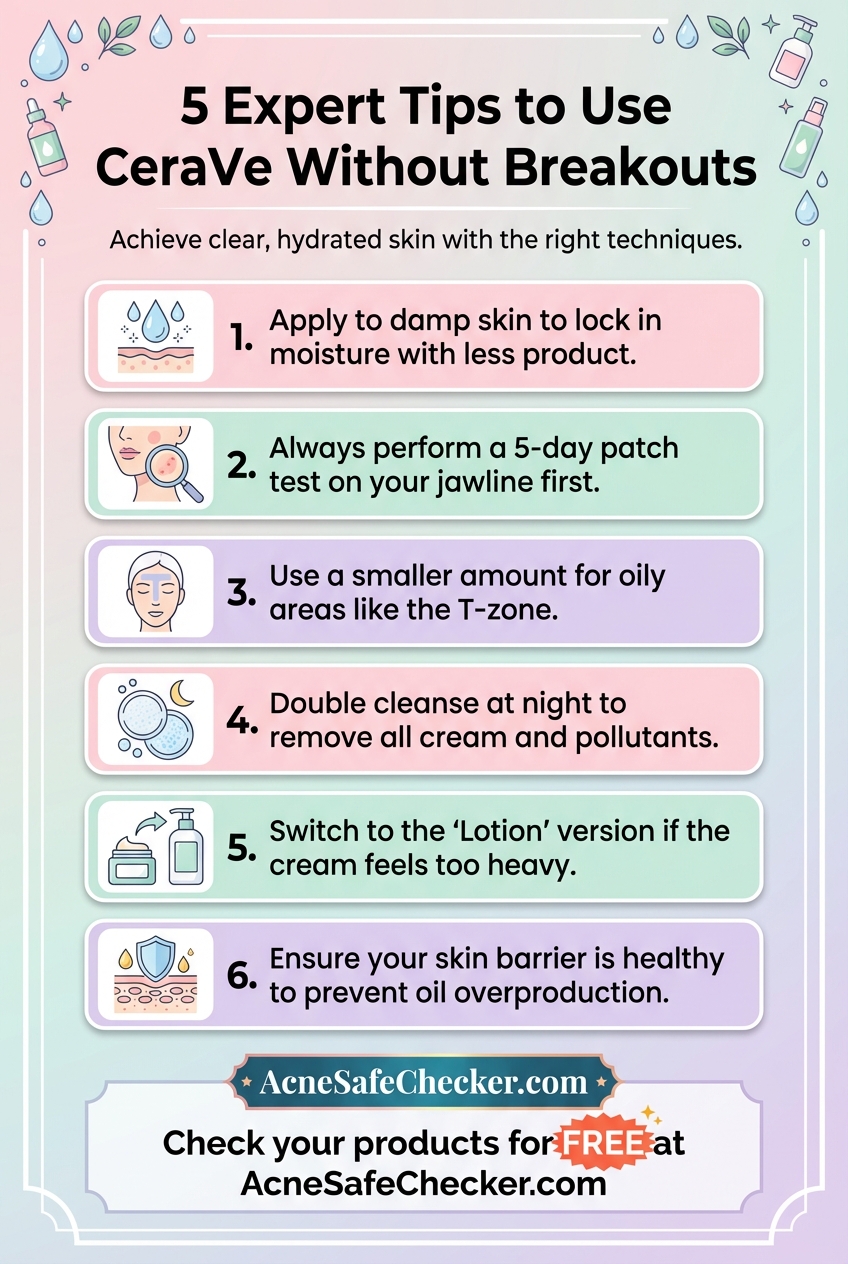
- Oily/Acne-Prone Skin: If your skin is excessively oily, you might find the cream too rich for daytime use. In this case, CeraVe’s "Daily Moisturizing Lotion"—a lighter version of the cream—might be a more comfortable non-comedogenic choice.
Practical Tips for Using CeraVe Without Breaking Out
If you are nervous about starting a new cream, follow these dermatologist-approved steps:
- Apply to Damp Skin: This allows the cream to lock in existing moisture, meaning you can use a smaller amount of product to achieve the same result.
- The Patch Test: Apply a small amount to a specific area of your jawline for 3-5 days. If no breakouts occur, you are likely safe to use it full-face.
- Cleanse Thoroughly: Even non-comedogenic products can cause issues if they aren't washed off at the end of the day. Ensure you are using a gentle cleanser at night to remove the day's sweat, pollutants, and cream residue.
Conclusion
In the world of dermatology, CeraVe Moisturizing Cream is a rare