
When you are dealing with a flare-up of active acne, the instinctual response is often to reach for the harshest scrub in your cabinet. There is a common misconception that you can simply 'wash away' or 'scrub off' a breakout. However, as a dermatologist, I see the aftermath of this approach daily: compromised skin barriers, increased inflammation, and even permanent scarring.
Is Your Routine Acne-Safe?
Do not guess. Instantly check your products for pore-clogging ingredients with our AI-powered tool.
Check Ingredients NowExfoliation is indeed a critical component of managing acne, but when the skin is actively inflamed, the method matters more than the frequency. This guide will explore how to choose and use a gentle exfoliator for active acne to achieve a clearer complexion without the irritation.
Why Traditional Scrubbing Fails Active Acne
To understand why a gentle approach is necessary, we must first look at the anatomy of a breakout. Active acne—whether it be papules, pustules, or cystic lesions—is a sign of internal inflammation and a clogged pore (comedone).
Physical exfoliants, such as those containing walnut shells, apricot kernels, or large beads, rely on friction to remove dead skin cells. When these abrasive particles meet a raised, inflamed pimple, they cause micro-tears in the skin. This not only spreads acne-causing bacteria (Cutibacterium acnes) across the face but also triggers a wound-healing response that can lead to post-inflammatory hyperpigmentation (PIH) or redness that lasts long after the pimple is gone.
The Science of Chemical Exfoliation
Instead of mechanical friction, dermatologists recommend chemical exfoliation for active acne. Chemical exfoliants use specific acids or enzymes to weaken the 'glue' (desmosomes) that holds dead skin cells together, allowing them to shed naturally without trauma.
Salicylic Acid: The Gold Standard (BHA)
Salicylic acid is a Beta Hydroxy Acid (BHA). Unlike Alpha Hydroxy Acids (AHAs), which are water-soluble, BHA is oil-soluble. This allows it to penetrate deep into the sebum-filled pores to dissolve the 'plug' of oil and dead skin. It also possesses anti-inflammatory properties, making it an ideal gentle exfoliator for active acne.
PHAs: The Gentle Alternative
Polyhydroxy Acids (PHAs), such as gluconolactone and lactobionic acid, are the 'cousins' of AHAs. They have a larger molecular structure, meaning they penetrate the skin more slowly and don't go as deep. This makes them incredibly gentle and suitable even for those with sensitive skin or rosacea-prone acne.
Fruit Enzymes
Enzymes derived from papaya (papain) or pineapple (bromelain) work by breaking down proteins in dead skin cells. They are generally less potent than acids, providing a very mild exfoliation that is safe for highly reactive skin.
How to Select the Right Product
When shopping for a gentle exfoliator for active acne, the ingredient list is your roadmap. Look for the following criteria:
- Non-Comedogenic Labeling: Ensure the product is specifically formulated not to clog pores.
- Low Concentrations: If you are new to acids, start with a 0.5% to 2% Salicylic Acid solution.
- Soothing Additives: Look for ingredients like green tea, allantoin, or centella asiatica (cica) which help calm the skin while the exfoliant works.
- Avoid Drying Alcohols: High concentrations of denatured alcohol can strip the skin barrier, leading to 'reactive seborrhea' where the skin produces even more oil to compensate for dryness.
Practical Steps for Safe Exfoliation
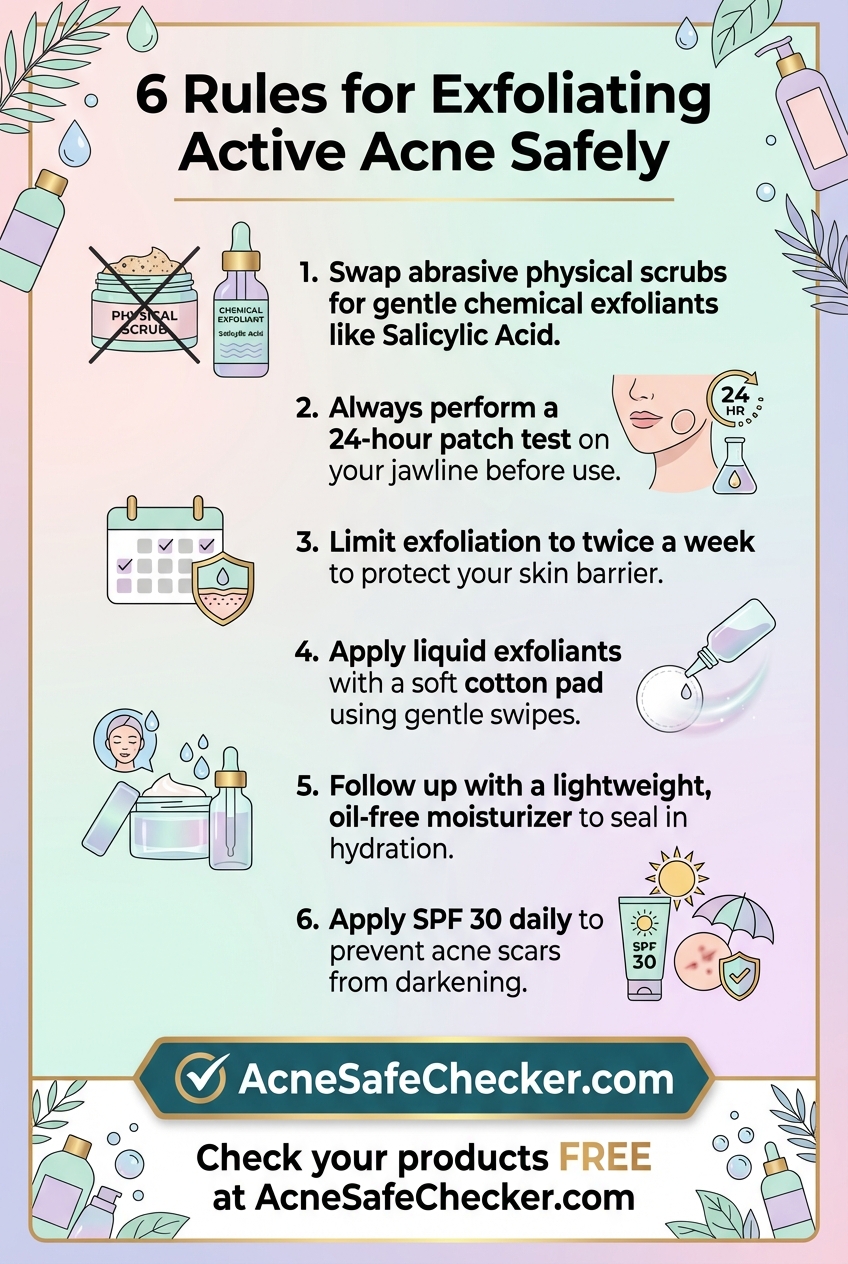
If you have active breakouts, follow this protocol to ensure you are supporting your skin rather than stressing it:
1. The Patch Test
Before applying any new exfoliator to your entire face, apply a small amount to your jawline. Wait 24 hours to ensure you don't experience an adverse reaction or excessive peeling.
2. Frequency is Key
More is not better. Start by exfoliating only twice a week. As your skin builds a tolerance, you may increase to every other night. Never exfoliate more than once a day when dealing with active acne.
3. Application Technique
If using a liquid exfoliant (like a BHA toner), use a soft cotton pad and gently swipe—don't rub. If using a leave-on treatment, apply it with clean fingertips using a light patting motion.
4. Support the Barrier
Exfoliation removes the top layer of the skin, which can increase trans-epidermal water loss. Always follow your exfoliator with a lightweight, oil-free moisturizer to seal in hydration and protect the skin barrier.
5. Sun Protection
Many exfoliants, particularly AHAs, can increase sun sensitivity. Even if you are only using a BHA, daily SPF 30 or higher is non-negotiable to prevent the darkening of acne scars.
When to See a Professional
While over-the-counter gentle exfoliators are effective for mild to moderate acne, they have limits. If your acne is deep, painful, or causing permanent indentations (pitting), it is time to consult a board-certified dermatologist. We can provide prescription-strength retinoids or chemical peels that offer deeper results with controlled safety.
Conclusion
Managing active acne requires a balance of correction and care. By swapping harsh physical scrubs for a scientifically-backed gentle exfoliator, you treat the root cause of the blockage without damaging the delicate skin surface. Remember: skin health is a marathon, not a sprint. Be patient, be gentle, and your skin will reward you with clarity and resilience.