
For years, those with oily and acne-prone skin were told to avoid cream-based makeup at all costs. The conventional wisdom suggested that only powders could soak up excess sebum and prevent the dreaded 'midday meltdown.' However, with the rise of the 'clean girl' aesthetic and the desire for a natural, lit-from-within glow, cream blushes have become a staple in every beauty enthusiast's kit.
Is Your Routine Acne-Safe?
Do not guess. Instantly check your products for pore-clogging ingredients with our AI-powered tool.
Check Ingredients NowIf you struggle with breakouts, you might feel stuck between a rock and a hard place: you want the fresh, dewy finish of a cream blush, but you fear the inevitable whiteheads and cystic bumps that often follow. As a dermatologist, I’m here to tell you that you don't have to choose. By understanding the science of comedogenicity and identifying specific 'acne-safe' formulations, you can enjoy the flush of a cream blush without compromising your skin’s clarity.
Why Cream Blush is Tricky for Oily Skin
Traditional cream blushes are often formulated with high concentrations of emollients, waxes, and oils. These ingredients are designed to provide a smooth 'slip' and a hydrating finish, which is excellent for dry or mature skin. However, for those with an overactive sebaceous gland, these same ingredients can act as an occlusive seal.
When a heavy cream product sits on oily skin, it can trap dead skin cells and sebum inside the follicle. This creates an anaerobic environment where Cutibacterium acnes (the bacteria responsible for acne) thrives. This process is known as acne cosmetica—a form of acne triggered by the topical application of cosmetic products.
The Science of Comedogenicity
To find an acne-safe cream blush, we must look at the comedogenic scale. This scale ranks ingredients from 0 to 5 based on their likelihood of clogging pores. While the scale isn't perfect (as it depends on the concentration of the ingredient and the overall formulation), it serves as a vital roadmap for those with sensitive, reactive skin.
Ingredients to Avoid (The Red Flags)
When scanning the ingredient label of your next cream blush, keep an eye out for these common offenders:
- Isopropyl Myristate and Its Derivatives: Often used to give products a velvet feel, this is highly comedogenic.
- Coconut Oil (Cocos Nucifera): While great for the body, it is a known pore-clogger for facial skin.
- Lanolin: A sheep-derived wax that can be too heavy for oily complexions.
- D&C Red Pigments: Specifically D&C Red #9, #17, #30, and #36. Interestingly, some synthetic red dyes used in blushes are known to be more comedogenic than the base formula itself.
Identifying Acne-Safe Cream Blush Formulations
So, what should you look for? The modern cosmetic market has evolved, and many brands now offer 'cream-to-powder' formulas or water-based gels that are specifically designed for oily skin types.
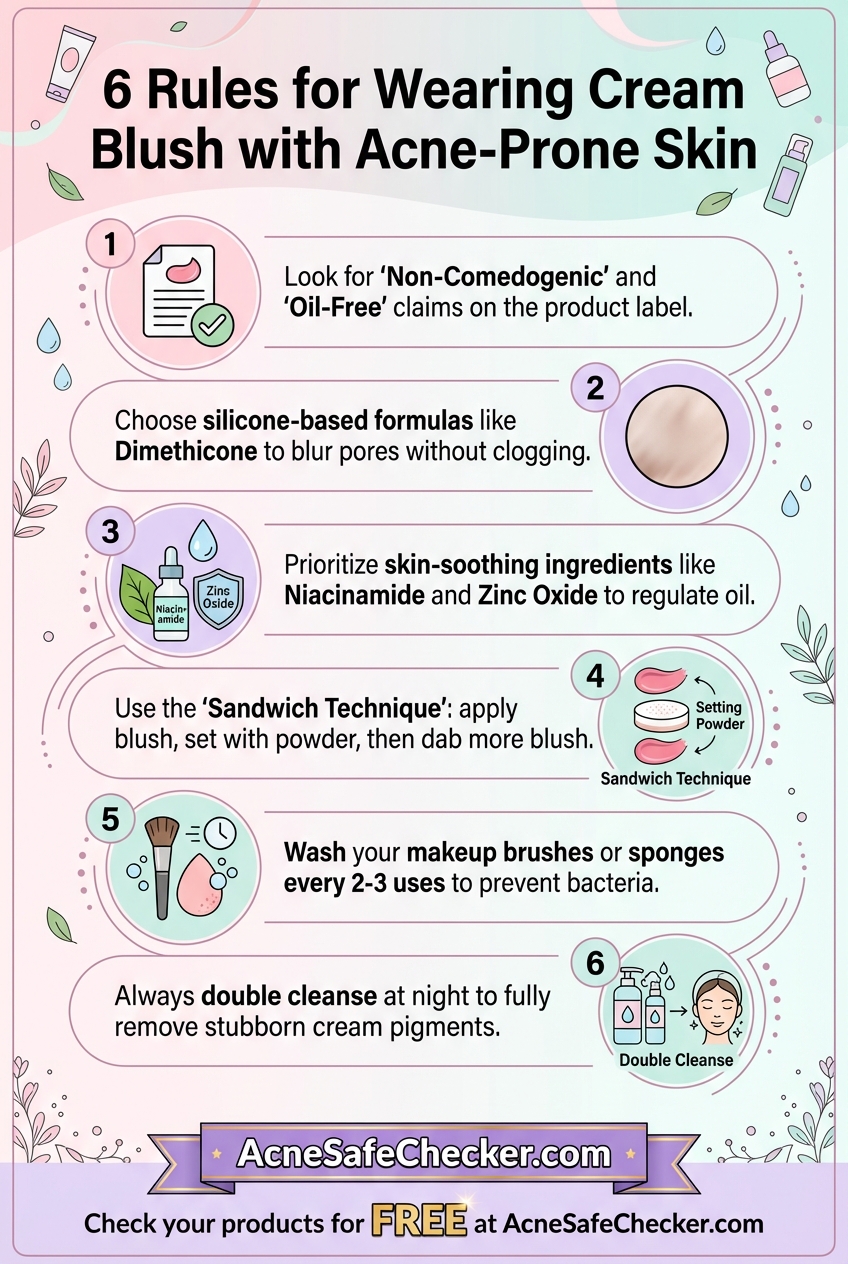
1. Look for "Non-Comedogenic" and "Oil-Free"
While these terms are not strictly regulated by the FDA, they indicate that the brand has formulated the product without the most common pore-clogging culprits.
2. Seek Out Silicone-Based Blushes
Contrary to popular myths, medical-grade silicones like Dimethicone are generally safe for acne-prone skin. They have a large molecular structure that sits on top of the skin rather than sinking into the pores, providing a smooth finish and a protective barrier without causing congestion.
3. Benefit from Skin-Soothe Ingredients
Some modern blushes are 'hybrids,' containing skincare ingredients. Look for blushes infused with:
- Niacinamide: To regulate oil production.
- Zinc Oxide: To provide anti-inflammatory benefits.
- Squalane: A lightweight, non-comedogenic oil that mimics the skin's natural sebum without clogging it.
Professional Application Tips for Oily Skin
How you apply your blush is just as important as the formula itself. To ensure your cream blush stays put and doesn't irritate your skin, follow these steps:
Prepare the Canvas
Always start with a clean face and a lightweight, oil-free moisturizer. If your skin is particularly oily, applying a mattifying, silicone-based primer specifically on the cheeks can create a buffer between your skin and the pigment.
Use Clean Tools
Bacteria is the enemy of acne-prone skin. If you prefer using your fingers, ensure they are freshly washed. If you use a brush or a beauty sponge, wash them after every two to three uses to prevent the buildup of bacteria and old product.
The "Sandwich" Technique
To increase the longevity of a cream blush on oily skin, try the sandwich method:
- Apply your cream blush.
- Lightly dust the area with a translucent, talc-free setting powder.
- Add a tiny bit more cream blush on top for a natural glow, or leave it set for a matte finish.
The Importance of the Double Cleanse
Even the most 'acne-safe' makeup can cause issues if left on overnight. Cream products tend to adhere to the skin more stubbornly than powders. At the end of the day, use a micellar water or a lightweight cleansing oil to break down the makeup, followed by a gentle salicylic acid or benzoyl peroxide cleanser to ensure no residue remains in the pores.
Conclusion
Achieving a healthy, flushed look shouldn't result in a breakout. By becoming a savvy label-reader and opting for non-comedogenic, oil-free cream blushes, those with oily skin can finally enjoy the benefits of cream-based cosmetics. Remember, makeup should enhance your confidence, not cause more skin stress. Choose formulas that respect your skin's biology, and you'll find that 'dewy' and 'clear' can finally exist in the same sentence.