
Introduction
Is Your Routine Acne-Safe?
Do not guess. Instantly check your products for pore-clogging ingredients with our AI-powered tool.
Check Ingredients NowIf you have ever dealt with stubborn, itchy, uniform bumps on your forehead, chest, or back that refuse to respond to traditional acne treatments, you might be dealing with fungal acne. Scientifically known as Malassezia folliculitis, this condition isn't actually acne in the traditional sense; it is an overgrowth of yeast within the hair follicles.
When managing fungal acne, your ingredient list becomes your most important tool. One question I frequently hear in my clinic is: "Is niacinamide safe for fungal acne?" The short answer is a resounding yes—but with a few critical caveats regarding the formulation of the product. In this guide, we will dive into the science of niacinamide, why it is generally safe for fungal acne, and how to ensure your skincare routine isn't accidentally feeding the yeast.
What is Fungal Acne (Malassezia Folliculitis)?
To understand why niacinamide is safe, we first need to understand the enemy. Unlike Acne Vulgaris, which is caused by bacteria (C. acnes), fungal acne is caused by a genus of yeast called Malassezia.
This yeast is a normal part of the skin’s microbiome, but it can become pathogenic when it overgrows. Malassezia is lipophilic, meaning it "loves fat." It feeds on fatty acids with carbon chain lengths between 12 and 24. When you apply skincare products containing specific oils, esters, or polysorbates, you are essentially providing a feast for the yeast, leading to the characteristic itchy, red bumps.
The Science of Niacinamide: Why It’s Safe
Niacinamide, also known as Vitamin B3, is a water-soluble vitamin. Because it is not a lipid (fat) and does not contain the specific fatty acid chains that Malassezia consumes, the yeast cannot use niacinamide as a fuel source.
From a chemical standpoint, niacinamide is completely "fungal acne safe." In fact, it is one of the most versatile ingredients for those struggling with this condition because it addresses several of the underlying issues that make fungal acne worse.
The Benefits of Niacinamide for Fungal Acne Sufferers
As a dermatologist, I often recommend niacinamide not just because it is safe, but because it is actively beneficial for those prone to Malassezia overgrowth. Here is how it helps:
1. Regulation of Sebum Production
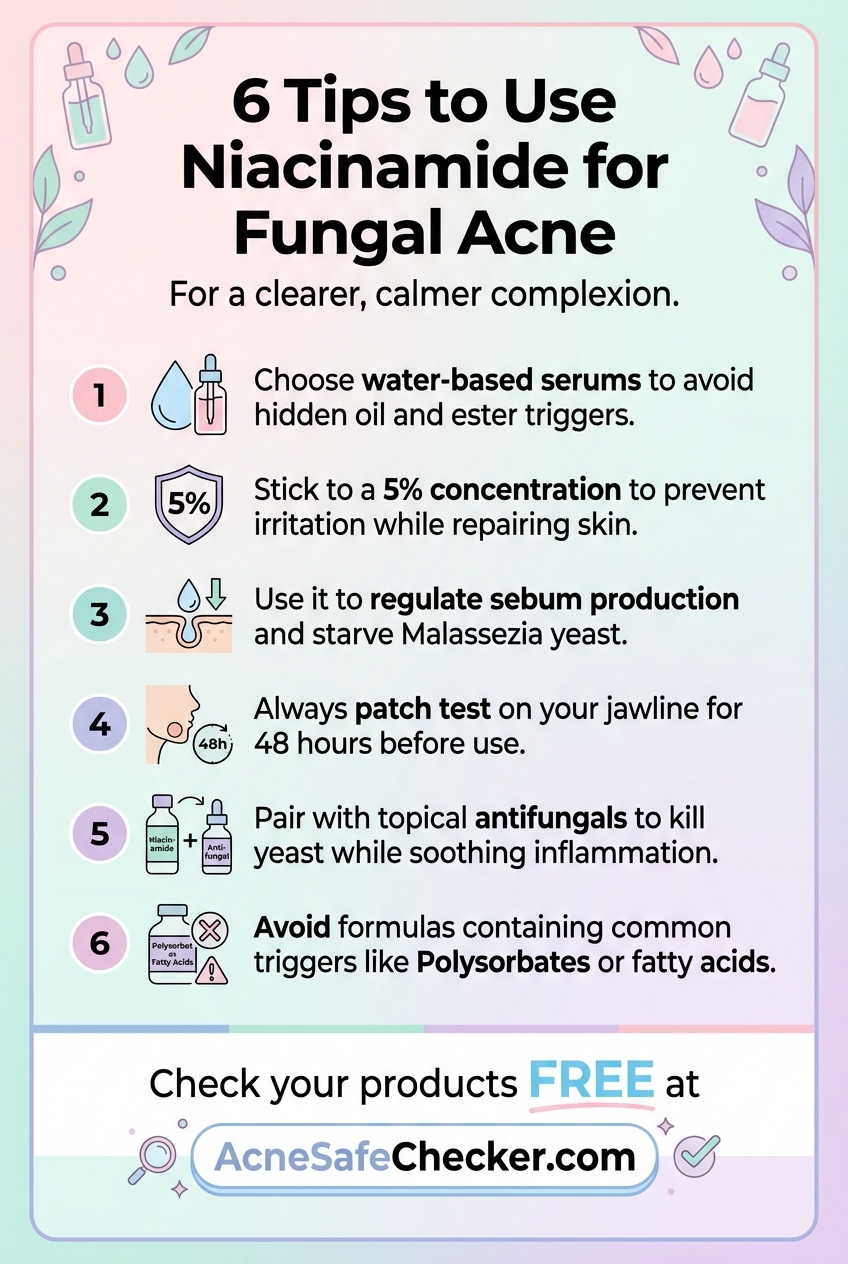
Since Malassezia feeds on human sebum (our natural skin oil), reducing the amount of oil on the skin surface can effectively "starve" the yeast. Niacinamide is clinically proven to regulate sebum production, making the skin a less hospitable environment for fungal overgrowth.
2. Anti-Inflammatory Properties
Fungal acne is notoriously itchy and inflamed. Niacinamide is a potent anti-inflammatory agent that helps soothe the redness and irritation associated with folliculitis flare-ups.
3. Skin Barrier Repair
Fungal acne often thrives when the skin barrier is compromised. Niacinamide increases the production of ceramides and free fatty acids in the skin, strengthening the moisture barrier. A strong barrier is your first line of defense against microbial imbalances.
4. Post-Inflammatory Hyperpigmentation (PIH)
Once the fungal breakout clears, it often leaves behind dark spots. Niacinamide inhibits the transfer of pigment (melanin) to skin cells, helping to fade these marks faster.
The "Catch": Check Your Product Formulation
While niacinamide itself is safe, the vehicle (the serum, cream, or lotion it comes in) might not be. This is where most people go wrong. If you use a niacinamide serum that contains fungal acne triggers, you may blame the niacinamide for a breakout that was actually caused by the other ingredients.
When shopping for niacinamide products, avoid these common fungal acne triggers:
- Fatty Acids: Lauric, Myristic, Palmitic, Stearic, and Oleic acids.
- Oils: Most natural oils (like coconut or rosehip) are triggers, though squalane and MCT oil (caprylic/capric triglycerides) are generally considered safe.
- Esters: Look for ingredients ending in "-ate," such as Isopropyl Palmitate or Glyceryl Stearate.
- Polysorbates: Ingredients like Polysorbate 20, 40, 60, or 80.
Practical Advice: How to Use Niacinamide Safely
To successfully integrate niacinamide into a fungal acne-safe routine, follow these steps:
- Choose Water-Based Serums: Look for lightweight, oil-free niacinamide serums. These are less likely to contain the heavy esters or fatty acids that feed yeast.
- Start with a 5% Concentration: While 10% serums are popular, they can be irritating for some. A 5% concentration is the "sweet spot" for efficacy without irritation.
- Patch Test: Always patch test a new product on a small area of your jawline or neck for 48 hours to ensure neither the niacinamide nor the preservative system triggers a reaction.
- Pair with Antifungals: If you are currently in the middle of a flare-up, niacinamide works excellently alongside topical antifungals (like ketoconazole). Use the antifungal to kill the yeast and the niacinamide to repair the skin barrier.
Conclusion
Is niacinamide safe for fungal acne? Yes, absolutely. It is a non-comedogenic, non-lipophilic ingredient that offers significant benefits for oil control and inflammation. However, the efficacy and safety of your niacinamide product depend entirely on the total formulation.
By choosing oil-free, ester-free, and polysorbate-free niacinamide products, you can enjoy the skin-brightening and pore-refining benefits of Vitamin B3 without the fear of fueling a Malassezia flare-up. If you find your skin is not improving despite using safe ingredients, it is always best to consult with a board-certified dermatologist for a formal diagnosis and a tailored treatment plan.