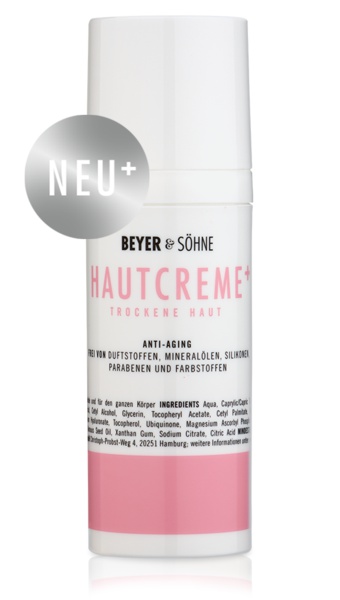
Beyer&Söhne Hautcreme+ Trockene Haut
Beyer&Söhne Hautcreme+ Trockene Haut is a sophisticated moisturizer designed specifically for those with dry, demanding skin. The brand focuses on 'skin-identical' ingredients, aiming to mimic the natural lipid barrier to promote long-term skin health. Key beneficial ingredients include Squalane, which provides lightweight yet effective hydration, and Hydrogenated Phosphatidylcholine, a component that helps repair and stabilize the skin's protective layer. The formula is notably free from traditional emulsifiers, fragrances, and harsh preservatives, making it appear gentle for sensitive complexions. Its texture is rich and deeply emollient, providing immediate relief for tightness and flakiness without a greasy finish. However, while the ingredient list boasts high-quality actives and biocompatible lipids, it also contains components that require caution for those prone to breakouts. The cream is expertly formulated to deeply nourish the stratum corneum, but the inclusion of specific fatty acids means its rich texture may be a double-edged sword. If you have very dry skin that isn't prone to congestion, this cream offers excellent barrier support and hydration.
Our Analysis
Our analysis of Beyer&Söhne Hautcreme+ Trockene Haut reveals a HIGH comedogenic risk level, making it a product to watch closely if you are acne-prone. The most significant concern is Oleic Acid, which carries a 4/5 rating; it is known to disrupt skin barrier function in some individuals and can induce significant pore blockage. Furthermore, the formula contains Caprylic/Capric Triglyceride, Cetyl Alcohol, and Tocopherol, all rated 2/5. While these are generally safe for many, their combination in a rich cream can exacerbate congestion for those with highly reactive or sensitive skin. Factual data suggests caution for those struggling with active acne.
Skin Type Recommendations
This product is best suited for very dry, mature, or non-acne-prone sensitive skin types needing intense barrier repair. However, it is not recommended for oily, combination, or acne-prone skin. The presence of Oleic Acid makes it highly likely to cause breakouts or whiteheads in those prone to congestion.
Flagged Ingredients
Disrupts skin barrier function and induces pore blockage.
Fractionated coconut oil; removed most clogging long-chain acids but can still affect some.
A fatty alcohol (emollient) that is generally safe, but can be problematic for very sensitive individuals.
Pure Vitamin E is thick and sticky; safe in small amounts as an antioxidant, but potentially clogging in pure oil form.
Want Deeper Analysis?
Run our MACR (Multi-Axis Comedogenic Risk) analysis to get a comprehensive 5-axis risk assessment. This AI-powered analysis evaluates ingredients for Plugging Risk, Barrier Damage, Fungal Acne Risk, Oxidation Risk, and real-world User Reports — giving you personalized scores for your skin type.