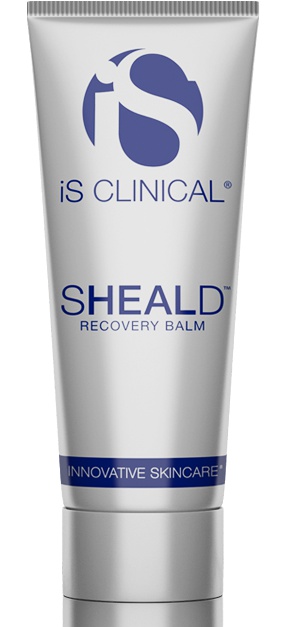
iS Clinical Sheald Recovery Balm (Discontinued)
iS Clinical Sheald Recovery Balm was specifically formulated as a high-performance moisture barrier for compromised skin, often recommended for post-procedure recovery. This thick, occlusive balm utilizes a blend of potent humectants like Sodium Hyaluronate and Glycerin, alongside Petrolatum, to create a protective seal that prevents trans-epidermal water loss. The texture is intentionally dense and nourishing, designed to soothe extreme dryness and support the skin's natural healing process after laser treatments or chemical peels. While its primary goal is skin repair and protection, the formulation includes ingredients that provide deep hydration but may be heavy for certain skin types. Though now discontinued, this balm remains a point of interest for those seeking intense barrier support. It offers a soothing, rich feel that immediately relieves tightness, but its complex ingredient profile means it isn't suitable for everyone—especially those navigating active acne or oily skin conditions. Understanding how its emulsifiers and antioxidants interact with the skin barrier is key to determining why it was a staple for some and a challenge for others.
Our Analysis
Our analysis assigns the iS Clinical Sheald Recovery Balm a MODERATE comedogenic risk level. The most significant concern is Ceteareth-20, which has a high rating of 5/5; it acts as a penetration enhancer that can inadvertently trap other ingredients within the pores. Additionally, when Cetearyl Alcohol is paired with Ceteareth-20, they create a synergistic comedogenic effect rated at 4/5. We also flagged Tocopherol (Vitamin E), which can be thick and potentially clogging in specific concentrations. While excellent for barrier repair, these ingredients make the formula risky for those prone to congestion and breakouts.
Skin Type Recommendations
This product is best suited for extremely dry, dehydrated, or post-procedure skin requiring a heavy occlusive barrier. However, it is not recommended for oily, combination, or acne-prone skin. The high comedogenic rating of the Ceteareth-20 and Cetearyl Alcohol combination is likely to cause significant pore clogging and cystic breakouts.
Flagged Ingredients
Highly comedogenic penetration enhancer. Opens the skin barrier to drag other ingredients deeper, causing congestion.
Pure Vitamin E is thick and sticky; safe in small amounts as an antioxidant, but potentially clogging in pure oil form.
Fatty alcohol emollient with low-moderate comedogenicity on its own. However, when combined with Ceteareth-20, the synergistic effect can significantly increase pore-clogging potential (combined rating of 4).
Want Deeper Analysis?
Run our MACR (Multi-Axis Comedogenic Risk) analysis to get a comprehensive 5-axis risk assessment. This AI-powered analysis evaluates ingredients for Plugging Risk, Barrier Damage, Fungal Acne Risk, Oxidation Risk, and real-world User Reports — giving you personalized scores for your skin type.